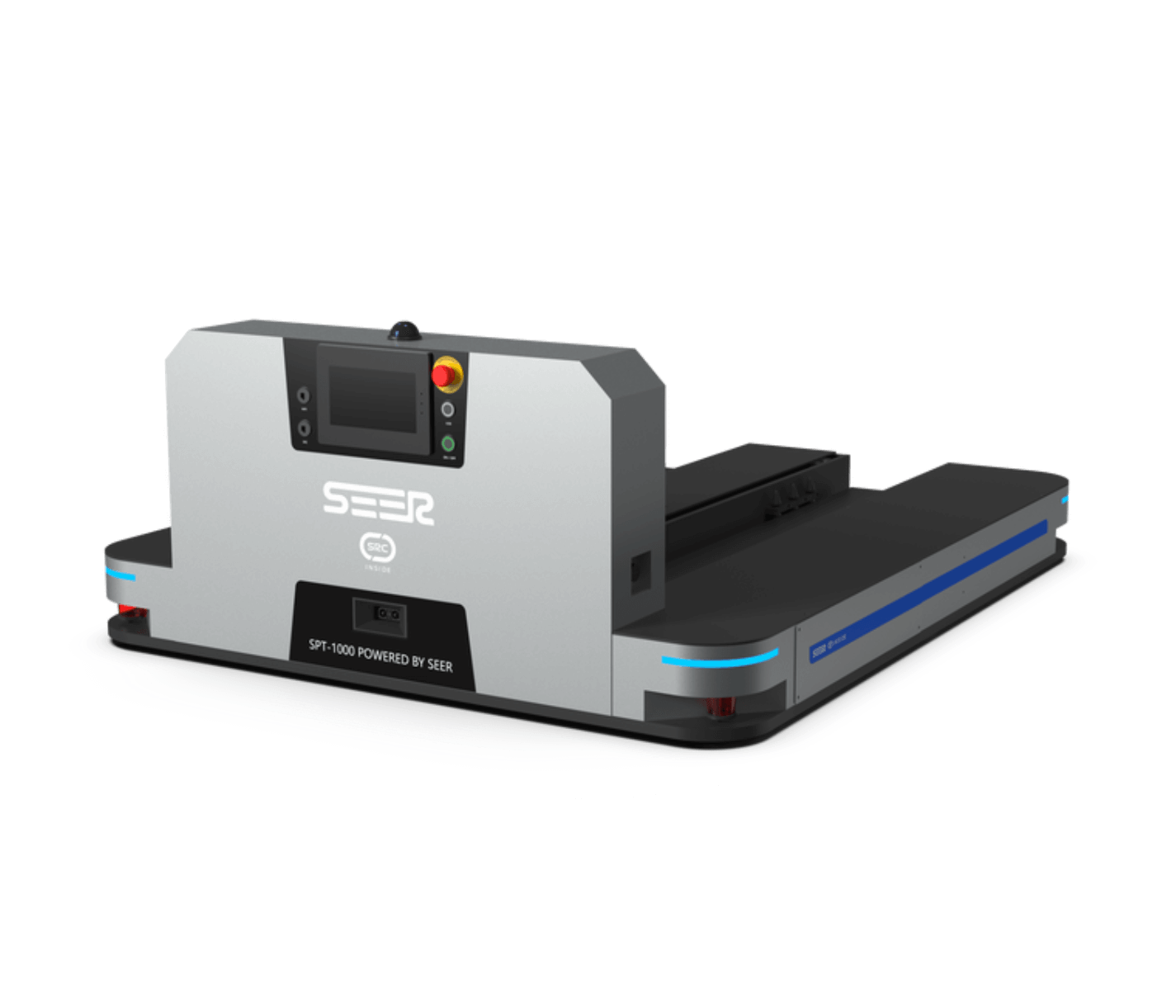
 SPT-1000
Autonomous pallet transport
A current SEER example for open and closed pallet handling, with a rated load of 1,000 kg and standard lifting height of 190 mm. Confirm the carrier geometry and route before selection.
Explore this application →Connect your production line, warehouse and material flow with autonomous mobile robots, intelligent forklifts and fleet software.
All Robots. One Platform. Fully in Your Control.
Explore solutions with Safe Automations for Saudi Arabia, UAE, Qatar and Bahrain.Start with what you need to move. SEER combines robots, SRC control technology and logistics software so material transfers can be planned as one connected operation.
SPT-1000A current SEER example for open and closed pallet handling, with a rated load of 1,000 kg and standard lifting height of 190 mm. Confirm the carrier geometry and route before selection.
Explore this application →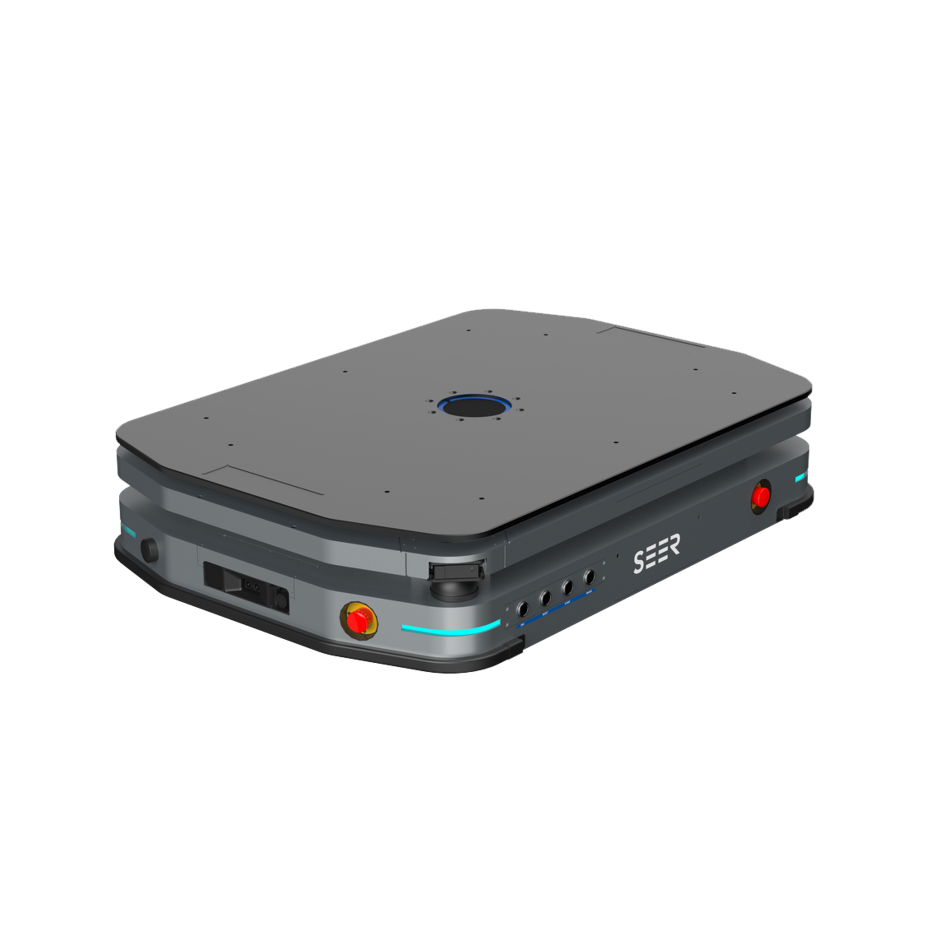 SLR-1000EU
A current lifting-robot example with a rated load of 1,000 kg. It travels underneath compatible racks to lift and transport them; rack clearance and stability need review.
Explore this application →Choose the forklift family around lift height, pallet design, load centre, turning space and handover position. Capacity at height must be checked for the selected model.
Explore this application →Connect component storage and workstations with automated tote or carton movement. Carrier size, layer configuration and station interfaces determine the solution.
Explore this application →A robot-building platform for mapping, localization, navigation and motion control, with configuration tools and compatible accessories for machine builders and integrators.
Explore this application →Plan robot tasks, coordinate material flow and connect warehouse processes. Visualization tools provide operational views of robots, tasks and storage locations.
Explore this application →Examples shown are a starting point, not a complete model list. Payload, lift height, navigation, safety options and regional availability must be confirmed for each project.
Build an initial application brief in a few steps. No contact details are needed to explore.
For floor-level pallet transfers, assess an autonomous pallet truck. Pallet openings, loaded dimensions, turning space and pickup height determine the model.
This guide suggests a solution family, not an engineered selection or quotation. A site review and model-specific safety assessment are required.
Prepare my project briefMove components, packaging materials and consumables from storage to production stations. Define a replenishment trigger and a safe handover location for each route.
Connect processing, assembly, inspection and packing stations. Assess racks, totes or pallets alongside buffer space and production takt time.
Explore transfers from palletizing or wrapping areas to storage and dispatch staging. Coordinate robot arrival with conveyor and machine-ready signals.
Applications can be assessed for manufacturing and logistics, including packaged food, consumer goods, automotive components and electronics. Sector-specific conditions determine feasibility.
Explore conveyor interfaces → Explore packaging systems →Robots create the most value when material requests, equipment handshakes and warehouse processes work together. Define the integration around your operation, from a standalone route to a coordinated fleet.
Request a software discussionFleet task allocation, traffic coordination and charging strategies.
Robot-based warehouse processes, inventory movement and connected equipment.
Robot dispatch and operational visibility. Meta-Map, Meta-Map Pro and Meta-World offer different levels of visualization.
Robot control, mapping, configuration and commissioning tools for integrators and machine builders.
Integration scope is agreed project by project: ERP / MES / WMS interfaces, PLC handshakes, doors, lifts, conveyors, Wi-Fi coverage, cybersecurity and support responsibilities.
Map loads, pickup and drop-off points, moves per hour, shifts, floor conditions and pedestrian traffic. Review the real layout and operating constraints.
Select a robot family, check model limits and safety requirements, plan docking and charging, and define software interfaces and acceptance criteria.
Commission the agreed scope, test representative loads and exception scenarios, train operators and agree support. Expand after the initial workflow is proven.
Use the solution finder above, then add your layout and operating details to this brief. You can copy it into our enquiry form or open it in your email application.
The finder runs in your browser. This page does not send the brief automatically. Review it before submitting an enquiry.
SEER mobile robots can support pallet movement, rack and trolley transport, line-side replenishment and transfers between production and warehouse areas. The right solution depends on the load, route, docking points and operating environment.
Start with the load carrier and handover height. A lifting AMR is a candidate for compatible racks or trolleys. Pallet trucks suit low-level pallet transport; stackers, reach trucks and counterbalance trucks address different lifting and pallet-handling requirements.
Laser SLAM configurations navigate using a map of the environment rather than a fixed tape path. Site preparation, floor condition, stable reference features and docking requirements still need assessment. Other navigation options depend on the model.
SEER fleet and logistics software provides integration options for business systems and connected equipment. Interfaces, licences, protocols, data ownership and responsibility for each integration must be agreed during project scoping.
SEER software supports coordinated robot operations. Compatibility with third-party robots is model- and interface-dependent and must be checked before specifying a mixed fleet.
Provide the carrier dimensions and loaded weight, pickup and drop-off heights, clear aisle widths, travel distances, required moves per hour, shifts, layout and any ERP, MES or WMS interfaces. Include floor, door, lift and pedestrian traffic constraints.
Suitability is application-specific. Washdown, cold storage, hygiene zones, explosive atmospheres and outdoor operation require explicit model and system verification. Product certification does not replace a site risk assessment.
Contact Safe Automations through the enquiry page or sales@safeautomations.com for projects in Saudi Arabia, the UAE, Qatar and Bahrain. Our team can discuss the application and agree the project scope and support arrangements.
Product references: SEER Robotics Product Booklet, July 2026, and current manufacturer information. SPT-1000SLR-1000EUSoftware
Speak with our team about SEER Robotics for your factory or warehouse in Saudi Arabia, UAE, Qatar or Bahrain. Share the application so we can define the next engineering step.